Thursday, 15 October 2009

The End Could be Nye For Trescothick


In a final and desperate attempt to successfully deal with his stress related illness, Marcus Trescothick may well have taken the first step towards his cricketing retirement as he pulled out of yet another tour abroad: with the same condition that ended his international career.

The Somerset man has been forced to pull out of his counties Twenty20 Champions League campaign with a recurrence of the stress related illness that forced him to retire from international cricket in March last year.

This is the third occasion the illness has forced him to leave a tour, something that first occurred back in 2006 during England’s tour of India.

To say the illness has hindered Trescothick’s cricket career would be a huge understatement, and his loss to his country was summed up by the frenzied speculation surrounding his possible return for the fifth Ashes test at The Oval.

It was a return that Trescothick refused to entertain and he continued to turn out match-winning performances for his team as he was named county cricket’s player of the year and the most valuable player of the year last season.

This latest setback however could well extinguish any possibility of a return to the national team and finally set the wheels in motion for his career to end.

With Twenty20 cricket becoming more predominant and the first class game diminishing in stature, the opportunities for matches to take place this side of the equator are going to be limited as years go on.

Along with that, the added responsibility of being named captain of the Taunton outfit as well as the time needed to fully get over this latest setback means it could be a long winter for the former England opener.

Trescothick is clearly committed to trying to battle against this crippling illness though, on two further occasions he attempted to make a previous tours before eventually not making the trip and extended periods on the sidelines receiving treatment meant he missed months of action for his county.

If the batsman’s career was ended by this horrific illness then a real talent would be lost from domestic cricket, as his form has blossomed since his personal exile from the international arena, but you can’t help but think it will eventually be his downfall.

Can the star really be expected to return from this third bout of illness and revive the sort of blistering form we saw him produce last season? He’s under enough pressure as it is.

Wednesday, 14 October 2009

Waddock Succumbs to Wycombe’s Advances


After 2 ½ years, 112 matches, 58 wins, two trophies and with legendry status safely achieved Gary Waddock has decided to move to Adams Park to seek a new challenge with Wycombe Wanderers.

The League One side have moved quickly to acquire the 47 year-old to replace former England under-21 manager Peter Taylor.

Just one win from their first twelve matches saw Taylor ousted from his position as manager, but in truth their struggle in the division was expected.

The manner in which Wycombe won promotion last season was enough of a sign of how they’d get on this as they stumbled over the line on the final day of the season.

Just a point on the final day at home to Notts County would have assured the club automatic promotion, but a 2-1 defeat meant Bury could snatch that third automatic promotion spot with a two-goal win over Accrington Stanley.

The shakers could only secure a single goal victory, which meant a venture into the playoff lottery and semi-final tie with Shrewsbury Town who defeated them after being just two minutes from an appearance at Wembley.

But as for Wycombe it was obvious there was a struggle to come and loosing influential defender David McCracken in the summer did nothing to improve their chances.

Waddock does have a pedigree of recent success in his short career as a manager, completing a league and cup double in his first full season in charge of the Shots in 2008

Maybe even more impressively, and with only minor changes, he turned the Conference champions into a comfortable League Two outfit inside just a season and before his departure the club looked set to mount a serious playoff challenge in this new term.

His departure from the post is sure to put talk of a playoff finish on hold as the search for a new manager begins and there are a number of names already in the frame.

Names from Steve Coppell to Tony Adams have been mentioned for the vacant managerial position, with some supporters leaning towards Stevenage manager Graeme Westley.

His success with Stevenage during his first spell at Broadhall Way is proof enough that he could tackle League Two football, that despite his inability to win promotion from the Conference with the same club.

The Rec would provide a home devoid of much expectation and knowing the clubs illustrious past, the new manager would be given plenty of time to get things right.

Waddock’s departure is the third big loss the club has had to endure in the past few months, and it could turn out to be the most significant.

After constant speculation as to his future, goalkeeper Nikki Bull chose to leave the club at the end of July, seeking an alternative career outside football.

Bull, who had targeted a career in journalism as light relief from the beautiful game, signed for Andy Scott’s Brentford three days later much to the despair of Aldershot fans.

A further blow to the club came in late August as it was announced that their Chairman John McGinty had lost his long running battle with cancer.

McGinty joined the club in 1992 and he oversaw five separate promotions as the club climbed into the football league.

His role in recent times has been slightly reserved as his illness started to take a hold of him, but his presence at the club was enough that the fans admiration of him was on a par with any of the club’s players.

Three huge losses in three months has damaged the club massively and it’s down to the new manager to instil the belief that the club can live on following the departure of three legendry figures.

Friday, 9 October 2009

Plunkett and Wright Profit From Ashes Fallout


Despite England’s Ashes victory this summer the international selectors have seen it fit to drop three members of that triumphant squad for the upcoming tour to South Africa.

Steve Harmison, Monty Panesar and Ravi Bopara make way for a new breed of England players such as Luke Wright, Liam Plunkett and Adil Rashid.

All three have experience in the shorter format of the game with England and have now been given their chance in the test side alongside the winning team from the final Ashes test at the Oval.

Joining the trio is Surrey’s Steven Davies, who is one of the most talked about players on the county circuit after impressing at Worcestershire last season.

It’s been made clear that he’ll be purely acting as a understudy to Matt Prior in the test side but soon enough the 23-year old will be challenging properly with the Sussex keeper.

Given that he’ll be spending more time carrying drinks that donning the gloves during the test series it’s a surprise that he’s not been included in the one-day squad after he replaced Prior in the Champions Trophy semi-final earlier this month.

In truth Davies’ omission is the only surprise in the one-day squad with Joe Denly again given a chance to impress.

Owais Shah may be in some peoples eyes be unlucky not to have been included, but his exclusion shows how the selectors are looking for consistent performances rather than sporadic scores.

An average of 30.56 just doesn’t stack up with those of other international number three’s and it might finally be time to stick fully fit Kevin Pietersen in the position to spearhead England’s batting line-up in both forms of the game.

Sajid Mahmood, whose one-day record has come under scrutiny before, is also included.

With Mahmood’s List A performances having yielded just seven wickets for his county Lancashire, Plunkett, whose test match career has been re-ignited by this latest re-call might feel unlucky not to have made both squads.

The Durham bowler took 49 wickets and scored 400 runs as his side retained the County Championship last season and he takes his place in the squad along with team-mate Graeme Onions who will vie with Plunkett for the final bowling spot.

His ability with the bat is sure to sit well with the selectors who will be keen to fill the void left by Andrew Flintoff with both bat and ball.

Plunkett’s inclusion does seem to have been eclipsed by the absence of Harmison, whose test match career may well be over after this latest snub.

It’s been well documented how Harmison has struggled away from home for England, but in truth the fast-bowler has never been the same player since his return from his first international exile and whether it be at home or on the road he’s struggled to hit top form in recent years.

His contribution in this year’s Ashes was passive at best and his attempts at trying to re-create his best form have been valiant but a failure all the same.

His petulant attitude towards being possibly given drinks duties may well have ended any chance of a second re-call to the squad, and it’s possible that we’ve seen the last of the strike bowler- a player the Australian’s will be delighted to see the back of.

Another man whose best form for the test squad seems like a distant memory is that of Ravi Bopara, who will find it tough to fight back into the team with Jonathan Trott, Ian Bell and Pietersen already battling it out for two batting spots.

Wright will certainly add an extra dimension to the batting order as well, but his call up comes in the midst of some poor form in the 50-over game for the youngster.

He might have made 48 in his last outing for the side, but that is just one of seven scores over 20 in his one-day career-hardly the form of a potential international star and definitely not of one who deserves a test-match call up.

Wright and the rest of the new breed may have to wait their turn on this forthcoming tour, but with youth on their side they represent the future of English cricket, and for the most part it looks pretty bright.

Monday, 5 October 2009

Dunne Shows His Worth As Bellamy Saves a Point

Aston Villa 1-1 Manchester City

Craig Bellamy came back to haunt former manager Martin O’Neil to secure a point for Manchester City as they drew 1-1 with Aston Villa

Richard Dunne had given the home side the lead after 15 minutes, scoring against his former club in the process but Bellamy upset the former Celtic boss by assuring the points were shared with a quality finish.

The match had been preceded with plenty of talk about Gareth Barry’s return to Villa Park, but in truth the mid-fielder escaped in comparison to that which his adversary Emmanuel Adebayor received during his recent meeting with Arsenal.

The Togo international was returning from a three-match ban after his much-talked about reaction to his mistreatment by Gunners fans last month and he lined up in a three pronged attack for the visitors.

The former Arsenal striker could have learnt a lot from Dunne, who himself was playing against a former club, as he rose above Barry of all people to head home brilliantly after a quarter of an hour.

Dunne showed the sort of professionalism that had been neglected by his opponent as he chose not to celebrate the opening goal in-front of his former employees, despite it’s great important and quality.

The game had given us the expected early goal, but the remainder of the half seemed to display both side’s defensive qualities in a game blessed with nine English players for the on-looking Fabio Capello to access.

The midfield duo’s on show went some way to explain City’s first half frailties, with Barry and Nigel De Jong happy to sit and rarely support their attacking team-mates, with the omission of Stephen Ireland seeming more and more glaring as the evening progressed

In-fact it took till the 40th minute for Mark Hughes’ men to record a credible shot on target when Adebayor leapt higher than Steve Sidwell from a Barry corner only for Brad Friedel to tip the ball comfortably over the bar.

There was then no surprised when Ireland was introduced after just five second half minutes to replace the Dutchman as Villa continually pushed to double their lead.

Dunne forced the best of those opportunities created as he could only force his header wide of Given’s right-hand post.

The significance of the miss was more a tribute to how Dunne and Co. had dealt with City’s multimillion pound strike force at the other end and that a second goal, even with 30 minutes remaining, would have all but sealed the points for the midlands club.

And as it turned out Dunne and Villa were to be punished, as a frantic clearance by the Irishman found his fellow countryman Ireland whose threaded pass found Adebayor who played the ball back for Craig Bellamy to smash the ball into the roof of the net.

It’s a tribute to Hughes that he’s been able to get the best out of the troubled striker whether it’s been for club or country and this goal was fully deserved for Bellamy’s tireless display down City’s left-hand side.

Both side’s laid down there intent for the remaining 23 minutes by both bringing on strikers, Roque Santa Cruz for City and Emile Heskey for Villa, with the England striker replacing the barely fit John Carew.

But the changes seemed to disrupt the play more than spur either side to go and take all three points and resulted with the remainder of the match being played in a subdued manner after what had been a typically frenzied evening at Villa Park.

Both managers will have been pleased not to have given anything over to their Champions League contenders, but the quality of the play suggested that both will be pushing the elusive top four all the way this season.

Staunton Needs Hope Rather Than Expectation


Not that anyone at Darlington Football Club would admit it, but the team’s future in the Football League is already hanging by the thread after a start to the season that has seen just two points acquired in their opening 10 league matches.

However it’s certain that the diminishing faithful at the Darlington Arena are only partly concerned by the team’s poor form, as they could have been left without a club entirely after a summer of uncertainty on and off the pitch.

The club entered administration for six months from Feburary last season, something that not only wrecked their promotion ambitions but also dwindled down their playing staff to just three and put the clubs future in real jeopardy.

A charity match and a number of other fund-raising events kept the club going throughout the summer until a buyer was found days before the beginning of the season, meaning the club could come out of administration and avoid another 10-point deduction.

So in all fairness you can forgive Quakers fans for not complaining too much about the clubs current predicament which see’s them already eight points adrift at the bottom of the table.

Colin Todd had been appointed earlier in the summer due the consortium’s confidence that the club would take it’s place in League Two at the start of the season, but instantly Todd’s job became almost impossible as all but three of the first team squad was culled to keep the club alive.

It took a huge re-building job for Darlington to even have a team at the beginning of the season with a number of free transfers from throughout the football league joining Todd to fight against relegation.

In addition a number of youth players were promoted to the first team including Curtis Main who had in-fact turned out for the full team on a number of occasions last season.

With a squad with more odds and ends than a Blue Peter model, Darlington have struggled to make any impact this season, just two points have been recorded, four goals scored and plenty of embarrassment endured along the way.

The player/assistant manager role of Dean Windass summed up the clubs predicament perfectly, a player clearly way past his prime trying desperately to re-create some of the magic that made him a cult hero with fans up and down the country.

The result wasn’t pretty.

Todd and Windass were sacked after the club failed to pick up a win away at Grimsby Town a few weeks ago, but the move has clearly been made by an owner, Raj Singh, whose footballing nouse is on a par with Del Boy.

It seems obvious that the owners expectations of the clubs progress this season are completely unrealistic, and if he felt that Todd should be keeping a squad up with a shoestring budget and a host of players who have come from all ends of the country then he needs his head checked.

The new man appointed Steve Staunton is on a hiding to nothing in my book.

He is sure to fight tooth and nail to keep the club afloat, but even with his managerial talent, which as we saw while he took charge of the Republic of Ireland is slightly limited, it would take a major turn around to see this club climb up the table; even 23rd would be an achievement.

Singh clearly needs a reality check, and maybe when he sees Staunton struggle just like those before him maybe he’ll realise that not only was sacking Todd a mistake but also that his club are doomed to relegation whether he likes it or not.

He’s revealed he will back Staunton and his assistant Kevin Richardson in the transfer market, but in having to wait another two months for that opportunity the beginning of the end might have already begun.

Saturday, 3 October 2009

Keane Proving Success Hard To Replicate


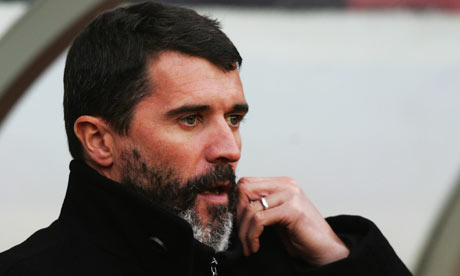
After finding the pressure too much at Sunderland, Roy Keane is now discovering the expectations at new club Ipswich Town to be just as demanding as his second stint as a manager in the unforgiving Championship is turning into a nightmare.

The Irishman’s first spell as a Championship manager proved hugely successful as he gained promotion with the Black Cats at the first time of asking after being partly bankrolled by chairman Niall Quinn.

Keane brought in a number of experienced heads before the summer transfer window closed in 2007 including David Connolly and Graeme Kavanagh who both arrived from Wigan Athletic, two players who helped the Latics to promotion to the Premiership two years previous.

After leaving Sunderland last season he was recruited by new owner Marucs Evans to mastermind promotion to the Premiership after the clubs seven-year absence.

Ipswich have endured some difficult times after there relegation from England’s top flight, torturous times that included administration the year after dropping out of the league, but nevertheless they’ve been famous for keeping faith with managers throughout their illustrious history.

Jim Magilton was given three years to turn the clubs fortunes around and in turn became the clubs second shortest serving manager when he was relinquished of his position two games short of the end of last season.

Keane enjoyed the predictable honeymoon period typical of any team in need of a new start winning their last two games of the season including the final match at Ninian Park against Cardiff City.

But that ideal start has been followed by a summer of inept signings by the former Manchester United skipper, and a start to the season that has seen as many goals tumble as records.

Evans has followed his promise of backing the new manager in the transfer market, but instead of going with the tried and tested method of bringing in players who have been there and done it, Keane has brought in a number of players without that important promotion experience.

Grant Leadbitter, who was indeed part of that Sunderland promotion side, is one of the few with any knowledge of getting out of this difficult division.

As of result of this, and some less than average performances particularly at home, the club have gone 10 league games without a win leaving some of the previously unconvinced supporters calling firmly for Keane’s head.

His unforgiving reputation as a player was never going to endear him to many set of supporters outside Old Trafford, but after being provided with plenty of funds this uncertain start just adds fuel to an inferno of abuse that Keane received as a player.

Keane’s financial demands at Sunderland reached ridiculous levels at times, as he demanded millions from Quinn to keep the side up after his opening season in the Premiership and even with that cash injection his tenure eventually ended in tears.

The media seemed quick to predict Ipswich as definite promotion contenders at the beginning of the season, and in some quarters as top two certainties but now survival seems like a more realistic ambition which sky rocketed after the purchase of the club by Evans.

In hindsight the squad that Keane has acquired is simply not one who have the ability to swap mid-table finishes for automatic promotion in just one season, not many sides can make that much of a turn-around in just two and half summer months.

Despite just a two year-contract being dished out to Keane his job, unlike that at Sunderland who had just been relegated, should not be directed towards promotion inside the first season given successive mid-table finishes under Magilton.

Hopefully Evans doesn’t follow the trigger-happy approach that so many managers have adopted already this season and in previous years, but in truth as I mentioned previously Ipswich as a club have the tradition of giving bosses plenty of time.

A two-year deal suggests to me the owner wants instant success and isn’t ready to trust Keane with a long-term deal until the club are regularly contending for promotion or even in the Premiership and will he see 10 matches without a win even a slight bit of progress? It’s unlikely

Even given his limited track record it would be disappointing to see Keane sacked before the end of the season, if nothing else how are a team able to develop and nurture if the new manager is given less than a season at the helm?

It’s a question I pose to almost every Football League chairman.

Only when Evans believes that relegation is a real possibility should he begin to consider Keane’s position, but the sooner he and the fans realise that expectations of promotion after just a single season are unreasonable then the club might be able to finally progress.

But in this current climate of endless managerial changes, Keane’s long-term ambitions could become nothing more than a pipe dream.

Thursday, 1 October 2009

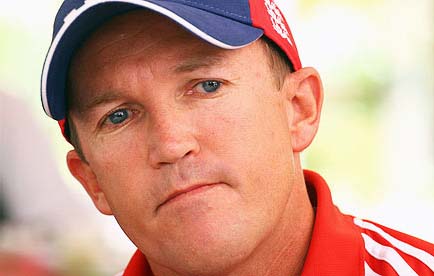
Flower Deserves the Plaudits For England’s Revival


England headed into this years Champions Trophy as one of the most un-fancied sides in the competitions history.

Along with the West Indies, who for months have been unable to field a fully strengthened side due to an ongoing contract dispute which has seen a number of high profile players refuse to turn out for the side, England were expected to be turned over in their three group games and become nothing more than spectators as the knock out stages came into full swing.

But Andy Flower’s team have barely given this grim script even a momentary glance as they beat strongly fancied Sri Lanka and then toppled hosts South Africa, victories that stunned the cricketing world.

What makes these performances even more baffling is that just days before the competition begun England had reached the climax of a seven match one-day series with their semi-final opponents Australia in which they were humbled 6-1.

And as if the odds weren’t stacked against England enough they’ve achieved this feat without unquestionably their two finest players in Kevin Pietersen and Andrew Flintoff.

Now if you’re a fellow England fan forgive me for my slight patronisation of the side’s achievement, I know they are still a cricket team after all, but when you look at England’s success in previous one-day competition’s you can hardly be brimmed with confidence.

Already the side have punched above their weight, and on Friday they have the chance to reach their second Champions trophy final when they take on the old enemy Australia, who stumbled into the semi-final with a final ball victory over Pakistan.

It’s fair to say that England’s resurgence in the aforementioned circumstances is partly down to a solid togetherness in the dressing room, no team could go through the loss in form and luck that they’ve endured without the solid foundation of team spirit.

Along with that the selectors should be praised for sticking with the same players throughout the whole summer and not being forced into a knee-jerk reaction after constant defeats.

Owais Shah and Paul Collingwood are two men who are definitely benefiting from the selectors consistent selection, and the duo have been intrinsic to England’s passage into the knock-out stage proving that the ECB’s continuity is finally paying off.

But for me aside from the players contribution there’s one-man above all else that has pulled this team together, and albeit momentarily, has never allowed the side’s standards slide after their Ashes victory and that man is Flower.

It might seem to difficult to believe but the team were turning out some decent performances in the one-day series with Australia and could have seen themselves one if not two-nil up early on in the series- and this is purely down to Flower pushing the team to retain their concentration.

Flower seems to have the dressing room all as one, not like under Peter Moores or Duncan Fletcher, who as one-day coach found it difficult to create any kind of consistency in performance.

Moores clearly had only half the dressing room on his side, and after Pietersen’s comments about his ability to do his job the ECB finally seem to have found the right man.

Post match interviews suggest that he takes no prisoners when things aren’t going right and he isn’t frightened to give players a dressing down if they simply aren’t performing and it’s clearly this type of moral boosting pep talk that has inspired England to the semi-finals in South Africa.

Between them and the final however is Ricky Ponting’s Australia who dismantled England’s post Ashes party with a thumping 6-1 series win last month and the holders will rightly go into the match as favourites

England will be hoping that it’s Australia who haven’t read the script on this occasion however.